It’s Not All Butterflies & Rainbows…Or Is It?!
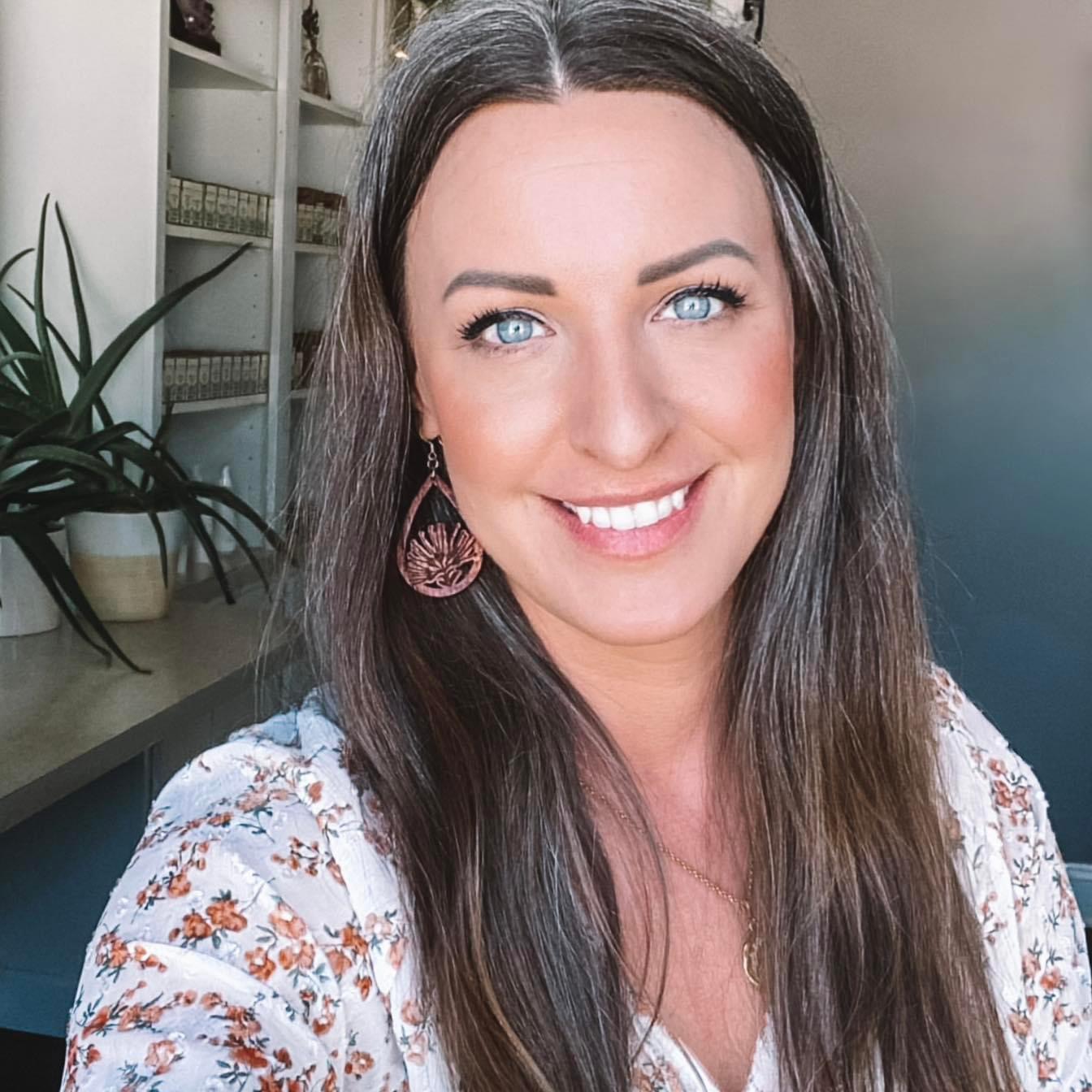

I was crying on the treadmill this morning.
Walking, actually. Nothing particularly athletic or dramatic about it… just one foot in front of the other, the familiar hum of the machine, and a woman approaching forty having an unexpectedly emotional encounter with the last ten years of her life.
Apparently, my body had scheduled a decade-end review without consulting my calendar.
My thirties were a decade of heartbreak.
There was a marriage and divorce after only three years, made somewhat more absurd by the fact that I’d been skeptical of marriage in the first place. My parents divorced. My brother struggled with hardship. My mother experienced frightening health scares. And in 2019, my receptionist died suddenly in a car accident.
There was also the uncomfortable realization that I had spent a considerable amount of energy confusing love with responsibility for other people’s lives. Coming to terms with my own codependency meant recognizing how often I’d abandoned myself while trying to keep everyone else from falling apart.
Some experiences changed me slowly while others seemed to rearrange the furniture of my entire existence overnight.
And while all of that was happening, I fell in love again.
I built a successful business, discovered somatic movement and yoga, and threw myself into the exhilarating creative chaos of building a yoga studio brand, which I then later dismantled. Now there’s Digested Living™, another enormous undertaking occupying my thoughts, my notebooks, and most of the available real estate in my brain.
I decided I wanted dreadlocks, acquired grey hair, and became considerably less interested in making my wildness socially convenient.
There was grief and there was joy. There were accomplishments I was enormously proud of and circumstances I desperately wished were different.
And somehow, despite all this actual living, I kept imagining that a good life was something I would eventually arrive at.
You know, once I had everything together.
Once the relationships were settled, the business was stable, my family was okay, the house was organized, and I had finally become the sort of woman who remembered to move the laundry into the dryer before it developed its own ecosystem.
Then I could relax.
Then I could enjoy my life.
Then, presumably, someone would present me with a certificate confirming that I had successfully completed being human.
The absurdity of this arrangement became increasingly difficult to ignore.
We seem to have developed an extraordinary expectation that a good life should feel good most of the time. We celebrate resilience, emotional regulation, gratitude, and positive thinking, but can become strangely uncomfortable when someone living an otherwise beautiful life admits they’re having a terrible day.
As though sadness indicates a failure to appreciate what we have.
As though anxiety means we haven’t healed enough.
As though being moved by something painful is evidence that we’re doing life incorrectly.
But I wonder what kind of life we’d have to live to avoid being affected by it.
To love someone is to become vulnerable to what happens to them. To build something meaningful is to risk disappointment. To care about the world is to encounter things we cannot fix. Even the most beautiful experiences carry the possibility of loss precisely because they matter to us.
Being available to life means being available to its entire emotional range.
And some of that range feels pretty shitty.
I don’t think we need to dress that up.
There are experiences that hurt, disappointments that linger, and losses that cannot be transformed into cheerful lessons about personal growth. Some days are difficult because something genuinely difficult is happening.
We can tend our nervous systems, nourish our bodies, seek support, and develop greater capacity to meet those experiences. Those things matter. But the purpose of caring for ourselves cannot be to eliminate every uncomfortable feeling.
A well-supported body is not a body that never feels distress.
And a well-lived life is not a life that never breaks our hearts.
I’ve been thinking about this in terms of integrity, particularly the way living systems remain themselves while participating in a changing environment.
The gut lining fascinates me because it innately maintains distinctions while allowing exchange with the world. It receives information and nutrients, responds to what arrives, and continually participates in relationships that influence its function.
Human emotional life is more complicated than intestinal physiology, of course, but I keep noticing a related pattern.
When we’re overwhelmed, one experience can become so loud that it seems to describe everything.
A heartbreak can make an entire decade feel heartbreaking.
And yet, when I looked back from that treadmill, I could see that my thirties had also been extraordinary.
The love was real. The laughter was real. The creative exhilaration was real. None of those experiences erased the painful ones, and the painful ones didn’t make the beautiful parts any less true.
Perhaps greater emotional capacity doesn’t mean becoming less affected by life. Perhaps it means being able to recognize more of what is happening without requiring everything to resolve into one feeling.
A few weeks ago, I caught myself saying, “I just want my old body back.”
I’ve been carrying about twenty extra pounds, and I was frustrated by the unfamiliarity of my reflection.
But back to which version?
The woman before her marriage ended? Before she understood her codependency? Before she fell in love again, built businesses, discovered yoga, or began creating something she could hardly have imagined ten years earlier?
I can miss how that body felt without wanting to return to the life that surrounded it.
There are parts of my past I would gladly revisit, but I wouldn’t trade what I’ve come to understand about myself simply to fit into an old pair of jeans.
Somewhere during my thirties, I became fascinated by Akhilandeshwari, the Hindu goddess whose name is often interpreted as never not broken, and by Paige Bradley’s sculpture Expansion, depicting a seated woman whose fractured form glows from within.
Both offered an image of something I’d been struggling to understand.
Perhaps transformation doesn’t always return us to our original arrangement.
Sometimes we emerge with a different shape.
Which brings me to butterflies.
I know… butterflies. 🙄
The universal mascot of inspirational wall art, questionable motivational quotes, and people telling us that everything happens for a reason.
But recently, I stood beside the water at sunset wearing enormous monarch wings, spreading my arms like a delighted child who had somehow been granted access to an adult woman’s wardrobe.
And I loved it.
Not because my life had become effortlessly beautiful, but because it hadn’t.
A butterfly’s transformation is a biological process, not a moral lesson about suffering. Still, I find something moving about a creature whose familiar form is radically reorganized during metamorphosis.
The wings are real and so was everything that came before them.
And then there are rainbows.
We use sunshine and rainbows as shorthand for a naive, unrealistic view of life, as though delight is something reserved for people who haven’t yet encountered difficulty.
But a rainbow requires a particular relationship between sunlight, water droplets, and an observer. The light is refracted, reflected, and separated into the colors we recognize.
Rain and sunlight aren’t competing explanations for the same sky.
They’re participating in what makes the rainbow visible.
I took a photograph of one stretching across the trees recently, and it occurred to me how strange it is that we use rainbows to represent an absence of difficulty when their appearance depends upon conditions we often associate with storms.
Maybe I’ve misunderstood the insult.
Maybe being a sunshine-and-rainbows person doesn’t mean believing everything is wonderful.
Maybe it means remaining capable of wonder while knowing perfectly well that everything isn’t.
Back on the treadmill, I was crying over a decade that had changed nearly everything about me. I was walking in a body I had recently wished would return to its former shape, carrying memories of people I’d lost, relationships that had changed, and versions of myself that no longer existed.
And then I laughed.
Because there I was, almost forty, having an existential reckoning at a modest walking pace, still imagining that someday I might finally get my life together.
Meanwhile, I’d been living it all along.
I suspect the next decade will contain more heartbreak. I certainly hope it contains more love, more creativity, more laughter, and a few more occasions to wear ridiculous butterfly wings in public.
I don’t need to pretend the difficult parts are beautiful.
But I don’t want to become so preoccupied with avoiding storms that I miss what else is happening in the sky.
I’m approaching forty with a heart that has broken and opened more than once, a body that has carried me through all of it, and a growing affection for the woman I’ve become.
Some days she’ll cry.
Some days she’ll spread her wings beside the water like an absolute lunatic.
And on particularly fortunate days, she might do both.
Perhaps it really is all sunshine and rainbows.
Just not in the way we were taught to imagine.


